Walk into any department store or scroll any marketplace, and 90% of the backpacks you see are built from polyester. It's the default material for the industry, cheap to source, easy to dye, simple to manufacture at scale.
Cordura sits on the opposite end. It costs more, weighs more, and requires more intentional design. But it outlasts polyester by a factor that turns the entire cost equation upside down.
This isn't an opinion piece about spending more money. It's a material-science comparison with measurable outcomes, abrasion data, tear mechanics, lifespan projections, and the math that tells you which material actually costs less when you measure in years rather than at checkout.
Two Fundamentally Different Polymers
The comparison starts at the molecular level because that's where the performance gap originates.
Polyester, technically polyethylene terephthalate (PET), is a petroleum-derived synthetic polymer. It's the same base material used in plastic bottles. PET is cheap to produce, holds dye reasonably well, and is easy to spin into fabric at industrial scale. These economics make it the default backpack material worldwide.
Cordura is built on nylon 6,6 (a polyamide), formed by reacting hexamethylenediamine with adipic acid. Nylon 6,6 has a fundamentally higher tensile strength, greater elasticity, and superior abrasion resistance compared to PET polyester. These aren't marketing claims, they're polymer chemistry.
On top of this base advantage, Cordura adds proprietary air-texturing of the yarn (creating a bulked, high-surface-area fiber that disperses friction), higher weave density (more yarn per square centimeter), and an INVISTA certification process that verifies performance before a fabric earns the Cordura name.
The practical shorthand: polyester is engineered for cost. Cordura is engineered for performance.
Full breakdown of Cordura's material science → What Is Cordura Fabric?
Abrasion Resistance: The Metric That Predicts Bag Lifespan
If you learn one thing from this comparison, learn this: abrasion resistance is the single best predictor of how long a backpack maintains its appearance and structural integrity under daily use.
Abrasion resistance is measured using standardized tests, Wyzenbeek (dominant in North America) and Martindale (dominant in Europe). Both methods drag a controlled abrasive surface across the fabric at standardized pressure and count the number of cycles before the fabric shows specified levels of degradation.
Published abrasion results vary with the test method and the exact fabric, but the pattern is consistent.
Cordura Ballistic 840D:Results vary with the test method and the fabric.
Cordura Classic 1000D:Results vary with the test method and the fabric.
600D Polyester:Results vary with the test method and the fabric.
900D Polyester:Results vary with the test method and the fabric.
That gap isn't marginal. In abrasion testing, CORDURA® nylon typically outlasts polyester of comparable weight by a wide margin. In a daily carry context, this translates directly: the bottom of a polyester bag that gets set on concrete floors shows visible wear within 6 to 12 months. The same surface in Cordura shows minimal change after 24+ months.
And it's not just the bottom panel. Every surface that contacts your body, your desk, a car seat, a metro railing, an airport security bin, all of it accumulates abrasion cycles. The bag that handles those cycles without visible degradation is the bag that looks professional after two years, not just two weeks.
Tear Strength: What Happens When Something Goes Wrong
Abrasion is gradual wear. Tear strength measures what happens in a moment, a sharp desk corner catches your bag, a seatbelt buckle snags the fabric, a zipper pull catches the shell.
Two things determine the outcome: tear initiation resistance (how hard it is to start a tear) and tear propagation resistance (how far a tear runs once it starts).
Nylon 6,6, Cordura's base polymer, has inherently higher elasticity than PET polyester. When a sharp object contacts the fabric, the nylon fibers stretch before they break, absorbing more energy before failure. Polyester fibers are more brittle, they break earlier and the tear begins sooner.
Once a tear initiates, propagation behavior diverges sharply. Cordura's dense weave and air-textured yarns create friction between fibers that resists tear propagation. A nick stays a nick. In polyester, especially at lower deniers, a small tear under load will often run, propagating across the fabric along the weave line. A 2cm snag becomes a 10cm rip when the bag is loaded.
This matters most at stress concentration points: where shoulder straps attach to the bag body, where zipper tape meets fabric, where buckle webbing anchors to the shell. These are the points where polyester bags typically fail first, and where Cordura's tear resistance provides the most value.
Cordura Ballistic weave (used in the Daily Dash) offers an additional advantage here. The 2×2 basket weave pattern distributes point-load forces across a wider fiber area than plain weave. A sharp object pressing against ballistic Cordura encounters four fibers simultaneously instead of two, making tear initiation measurably harder.
Water Resistance
Both materials can receive DWR (durable water repellent) coatings, and both can be backed with PU (polyurethane) coatings for additional water resistance. Neither material is inherently waterproof.
There is one inherent difference: PET polyester absorbs less water than nylon by mass (approximately 0.4% versus 2 to 4% for nylon). This means untreated polyester repels water slightly better than untreated nylon.
In practice, much of this difference disappears once coatings are applied. A coated, DWR-treated CORDURA® shell like the one on the Daily Dash sheds everyday rain much like coated polyester: water beads and rolls off. Under sustained downpour, some moisture can eventually find its way in at seams or zipper lines, which is why the Daily Dash comes with a Rain Fly.
The Daily Dash pairs that shell with YKK® Racquet Coil zippers, and includes a complimentary Rain Fly for heavy rain. The bag is water-resistant, not waterproof, so keep sensitive electronics protected separately on very wet days.
UV Resistance and Color Retention
This is the one area where polyester has a legitimate molecular advantage. PET's polymer chains are more resistant to UV-induced degradation than nylon's. Under sustained, direct UV exposure (think outdoor furniture, awnings, permanently sun-exposed surfaces), polyester outlasts nylon.
For backpacks, this advantage is mostly theoretical. Your bag spends most of its life on your back, under a table, or inside a room. The total UV exposure a backpack receives in a year is a fraction of what outdoor textiles endure in a month. Under normal bag-use UV exposure, both materials maintain structural integrity.
Color retention tells a slightly different story. Cordura's denser weave and air-textured surface hold dye more effectively than thinner polyester weaves. In practice, a black Cordura bag maintains its depth of color longer than a black polyester bag, the polyester fades toward a washed-out charcoal faster, especially in high-UV environments like most of India's geography.
Weight: Polyester's Genuine Advantage
This is where polyester wins, and the advantage is real.
A 600D polyester fabric weighs approximately 200 to 220g per square meter. 840D Cordura Ballistic sits at approximately 280 to 300g per square meter. 1000D Cordura Classic runs 330 to 350g per square meter.
For a complete 24L backpack, this translates to a weight difference of roughly 150 to 350g between polyester and Cordura. That's noticeable over an eight-hour carry day, felt as cumulative shoulder fatigue that compounds through the afternoon.
The Daily Dash accepts some of that weight on purpose. Its 1680D CORDURA® Ballistic shell is heavier than polyester, and the bag weighs 1.28 kg empty. The carry system is built around that: EVA foam padding, WOOJIN® POM hardware, S-shaped shoulder straps and a 3D spacer mesh back panel spread the load across your back and shoulders.
The weight trade-off is real. The question is whether you'd rather carry an extra 200g and keep the same bag for five years, or save that weight and replace the bag every year.
The 10-Year Cost Equation
This is the math that reframes the entire comparison.
Polyester path: A quality polyester backpack costs ₹2,000–₹5,000 and lasts 1 to 2 years of daily use before visible degradation (faded color, pilled surface, soft spots on the bottom panel, zipper issues) makes replacement attractive. Over 10 years: 5 to 8 bags × ₹3,500 average = ₹17,500–₹28,000.
Cordura path: A quality Cordura backpack costs ₹8,000–₹15,000 and lasts 5 to 10+ years of daily use while maintaining its appearance and structural integrity. Over 10 years: 1 to 2 bags × ₹12,000 average = ₹12,000–₹24,000.
The premium material is cheaper over any timeframe longer than two years. And the gap widens when you account for the non-financial costs of replacement: the time spent researching and buying new bags, the environmental impact of discarded bags, and the intangible value of carrying a bag that still looks sharp after 1,000+ days of use.
The Full Comparison Table
| Property | Cordura Ballistic 840D | Cordura Classic 1000D | Polyester 600D | Polyester 900D |
|---|---|---|---|---|
| Base polymer | Nylon 6,6 | Nylon 6,6 | PET | PET |
| Weave pattern | 2×2 Basket (Ballistic) | Plain/Twill | Plain | Plain |
| Tear initiation resistance | Excellent | Very good | Poor–Moderate | Moderate |
| Tear propagation resistance | Excellent | Good | Poor | Moderate |
| Weight (per m²) | ~280 to 300g | ~330 to 350g | ~200 to 220g | ~260 to 280g |
| Water absorption | 2 to 4% (mitigated by PU coating) | 2 to 4% | 0.4% | 0.4% |
| Water resistance (with DWR + PU) | Very good | Very good | Good | Good |
| UV resistance | Good | Good | Very good | Very good |
| Color retention | Excellent | Excellent | Moderate | Moderate |
| Pilling resistance | Excellent | Very good | Poor | Poor–Moderate |
| Scuff visibility | Low | Low | High | Moderate |
| Daily-use lifespan | 5 to 8+ years | 5 to 10+ years | 1 to 2 years | 2 to 3 years |
| Typical bag cost | ₹8,000 to 15,000 | ₹10,000 to 20,000 | ₹1,500 to 4,000 | ₹3,000 to 6,000 |
| 10-year cost of ownership | ₹8,000 to 15,000 | ₹10,000 to 20,000 | ₹15,000 to 28,000 | ₹12,000 to 24,000 |
| INVISTA certified | Yes | Yes | No | No |
When Polyester Makes Sense
Polyester isn't inherently bad, it's a misapplication when used for daily-carry bags expected to last.
Polyester works when: the bag is used 2 to 3 times per week rather than daily, budget is the primary constraint and short-term ownership is planned, the bag is a style piece that will be rotated out within a year, or the application involves minimal abrasion exposure (indoor-only use, light travel accessories).
When Cordura Is the Right Material
When the bag leaves the house every day. When it gets set on floors without hesitation. When you expect it to look professional after year two. When you think about cost-per-year, not cost-at-checkout.
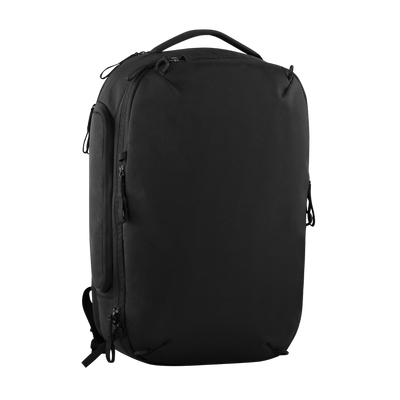
The Daily Dash is built on 1680D CORDURA® Ballistic for exactly this kind of daily use. A suspended sleeve holds a laptop of up to 16 inches above the base of the bag. YKK® Racquet Coil zippers and WOOJIN® POM hardware handle repeated opening and fastening. Lockable main zippers, a hidden pocket with an AirTag slot and an RFID card holder on the shoulder strap cover the security side.
The fabric is the foundation. But the system, material, hardware, construction, and design working together, is what makes the bag last.
Read the complete Cordura backpack guide
How CORDURA® deniers compare, and why Daily Dash uses 1680D
FAQ
Is expensive polyester better than cheap Cordura? No. The polymer chemistry defines the performance ceiling. Even premium polyester can't match standard Cordura on abrasion resistance because PET and nylon 6,6 are fundamentally different polymers. A ₹5,000 polyester bag and a ₹2,000 polyester bag will both degrade faster than Cordura under equivalent daily use.
What about recycled polyester (rPET)? rPET performs close to virgin polyester in bag applications, with slightly lower tensile strength. CORDURA® also offers recycled variants. The Daily Dash lining is 230D high-tenacity polyester in a light colour, chosen for strength and so you can see what is inside.
Can I make a polyester bag last longer with care? Somewhat. Avoiding ground contact, cleaning regularly, and reapplying DWR can extend lifespan by 6 to 12 months. But the abrasion resistance ceiling is molecular, no amount of care changes the polymer's fundamental properties.
Why does the Daily Dash use CORDURA® outside and polyester inside? Because each surface does a different job. The exterior faces abrasion, weather, UV and daily impact, which is what 1680D CORDURA® Ballistic is for. The lining needs to be strong, smooth and light in colour so your things are easy to find, which is what 230D high-tenacity polyester provides.
Is the weight difference really noticeable? Over a short carry, no. Over an eight-hour day, yes. The Daily Dash mitigates this with S-shaped padded shoulder straps, a sternum strap for load stabilization, and a padded back panel with airflow channels. The engineering around the material matters as much as the material itself.
Keep reading: How to choose a premium laptop backpack in India · What a lifetime warranty covers